READ ALSO: Accurate Toyota Vitz Fuel Consumption 1000cc vs 1300cc & More
Table of Contents
Toyota 2010 Vitz Review
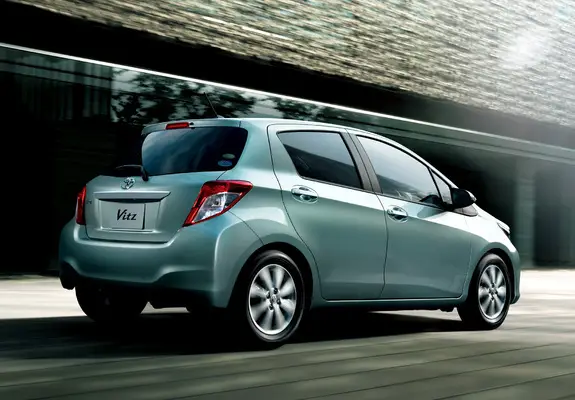
Remember I mentioned that the Toyota Vitz is known as the Toyota Yaris in certain parts of the world?
Watch a review of the 2010 version of this car below.
The Toyota Vitz 2010, also known as the Toyota Yaris in some markets, is a subcompact hatchback that is well-regarded for its reliability, fuel efficiency, and affordability. Manufactured by Toyota, the Vitz is a popular choice in many countries, especially in urban areas where its compact size makes it easy to maneuver through traffic and park in tight spaces.
READ ALSO: Toyota Vitz Fuel Consumption 1000CC vs 1300CC
Overview of the Toyota Vitz 2010
The 2010 Toyota Vitz belongs to the second generation (XP90), which was produced from 2005 to 2010 before being replaced by the third generation in 2010. It is available in three-door and five-door hatchback configurations, making it suitable for different needs. It is primarily a front-wheel-drive vehicle, although some models come with all-wheel drive (AWD) in specific markets.
Engine Options and Performance
The Toyota Vitz 2010 comes with several engine choices, depending on the market and trim level. These include:
- 1.0L (1KR-FE) 3-cylinder engine – Produces around 68 horsepower and is known for its excellent fuel efficiency, making it ideal for city driving.
- 1.3L (2SZ-FE or 1NR-FE) 4-cylinder engine – Produces around 85–87 horsepower and offers a balance between fuel economy and power.
- 1.5L (1NZ-FE) 4-cylinder engine – Produces around 106 horsepower, providing more power for highway driving. This engine is also available in the sportier RS model.
The transmission options include a 5-speed manual, a 4-speed automatic, and a CVT (Continuously Variable Transmission), depending on the variant and market. The automatic transmission is more common, especially in urban environments where stop-and-go traffic is frequent.
Toyota Vitz 2010 Fuel Consumption
One of the biggest selling points of the Toyota Vitz 2010 is its excellent fuel efficiency. The actual fuel consumption varies depending on the engine size and transmission, but the average fuel economy is between 16-20 km/l (37-47 mpg). The 1.0L engine is the most fuel-efficient, while the 1.5L engine consumes slightly more fuel but offers better acceleration and highway performance.
Vitz Toyota 2010 Interior and Features
The Toyota Vitz 2010 has a practical and comfortable interior, especially for a subcompact car. The design is simple but functional, and it includes:
- Fabric seats with adjustable headrests
- Power windows and power mirrors (depending on trim)
- Air conditioning
- A digital instrument cluster (in some variants)
- CD/MP3 player with speakers (higher trims may have a touchscreen infotainment system)
- Foldable rear seats to increase cargo space
While the interior is not particularly luxurious, it is well-built and offers good headroom and legroom for a car of its size.
Safety Features
Safety has always been a priority for Toyota, and the Vitz 2010 comes with several safety features, including:
- Dual front airbags
- ABS (Anti-lock Braking System)
- EBD (Electronic Brakeforce Distribution)
- Brake Assist
- Seatbelt pretensioners
- ISOFIX child seat anchors
Some higher trims or export models may also include side airbags, traction control, and stability control. The Toyota Vitz 2010 received decent safety ratings in crash tests, making it a reliable choice for budget-conscious buyers.
Driving Experience
The Toyota Vitz 2010 is known for its smooth and stable ride, making it a comfortable car for city driving. The steering is light, making it easy to navigate through traffic and park in tight spots. However, due to its small engine sizes, acceleration can feel sluggish, especially with the 1.0L engine. The 1.5L engine provides better performance for highway driving and overtaking.
2010 Vitz Car Drivetrain
The 2010 Toyota Vitz drivetrain is one of the reasons this small hatchback has earned a reputation for being economical, dependable, and easy to maintain.
The drivetrain refers to the system that transfers power from the engine to the wheels, including the transmission, drive layout, and related components.
The 2010 Vitz was offered with different drivetrain configurations depending on the market, engine, and trim level.
Front-Wheel Drive (FWD) Layout
The majority of 2010 Toyota Vitz models use a front-engine, front-wheel-drive (FF) layout. This means the engine is mounted at the front of the vehicle and sends power directly to the front wheels.
Front-wheel drive is a very common arrangement in compact cars because it offers several advantages:
- Better fuel efficiency because fewer drivetrain components are needed compared with rear-wheel drive.
- More interior space because there is no driveshaft running to the rear wheels.
- Good traction in normal driving conditions because the weight of the engine sits over the driven front wheels.
- Lower maintenance costs compared with more complex drivetrain systems.
For daily city driving, which is where the Vitz is primarily designed to operate, the FWD system works very well. It handles traffic, tight parking spaces, and normal road conditions efficiently.
Four-Wheel Drive Option
Some Japanese-market 2010 Vitz models were available with four-wheel drive (4WD), particularly with certain 1.3-liter engine variants. These models send power to all four wheels to improve traction on slippery roads, snow, or rough conditions.
However, many imported Vitz cars found in African markets, including East Africa, are usually front-wheel-drive versions.
The 4WD version is less common because it costs more, weighs more, and uses slightly more fuel.
For places with mostly paved roads and normal weather conditions, the standard FWD version is usually the more practical choice.
Transmission Options
The 2010 Toyota Vitz came with different transmission options depending on the engine and market. These included:
1. CVT (Continuously Variable Transmission)
Many 2010 Vitz models, especially Japanese domestic market versions, use Toyota’s Super CVT-i transmission.
A CVT does not use traditional fixed gears like a normal automatic transmission. Instead, it uses a belt-and-pulley system that continuously changes the gear ratio.
Advantages of the CVT:
- Excellent fuel economy
- Smooth acceleration
- Lower engine RPM during cruising
- Comfortable driving in traffic
The CVT is particularly suited to the Vitz because it is designed as an economical city car. It allows the small engines, such as the 1.0-liter and 1.3-liter versions, to operate efficiently.
However, CVT transmissions require proper maintenance. Neglecting transmission fluid changes can lead to expensive repairs. A Vitz with a smooth CVT, no shaking, no unusual whining noises, and proper service history is usually a good choice.
2. Conventional Automatic Transmission
Some Vitz versions use a traditional automatic transmission.
These are generally very durable and can tolerate neglect better than many CVTs. They may not be quite as fuel-efficient, but they are simple and reliable.
3. Manual Transmission
Certain versions, especially sport-oriented or specific export models, were available with manual gearboxes. Manual transmissions are mechanically simple and can last a very long time when properly maintained.
Engine and Drivetrain Pairing
The 2010 Vitz was available with several engines:
1.0-Liter 1KR-FE Three-Cylinder Engine
This engine is designed primarily for economy.
It works well with the CVT because the transmission keeps the small engine in its most efficient operating range.
Strengths:
- Very low fuel consumption
- Cheap servicing
- Good reliability
Weakness:
- Limited power when carrying several passengers, climbing steep hills, or overtaking at highway speeds.
1.3-Liter Engine
The 1.3-liter Vitz provides a better balance between performance and economy. It is often considered the ideal choice because it offers noticeably more power while still maintaining good fuel consumption. Toyota offered both front-wheel-drive and some four-wheel-drive versions of 1.3-liter models.
1.5-Liter Engine
The 1.5-liter version provides the strongest performance, especially in RS models. It is better suited for drivers who frequently travel longer distances or drive on highways.
Differential and Axles
Because the Vitz is mainly front-wheel drive, the differential is integrated into the transmission assembly, creating what is called a transaxle.
The drivetrain components include:
- Engine crankshaft
- Transmission/transaxle
- Differential
- Front drive shafts (half shafts)
- Constant velocity (CV) joints
- Front wheels
The CV joints allow the front wheels to receive power while still being able to turn for steering and move with the suspension.
Common drivetrain-related wear items include:
- CV joint boots (rubber covers that protect the joints)
- Drive shaft seals
- Transmission fluid
- Engine mounts
A damaged CV joint may produce a clicking sound when turning, especially under acceleration.
Reliability of the 2010 Vitz Drivetrain
The drivetrain is one of the strongest aspects of the 2010 Toyota Vitz. With regular maintenance, these cars commonly reach very high mileage.
Important maintenance practices include:
- Changing engine oil regularly
- Using the correct CVT fluid where applicable
- Checking transmission performance before buying a used model
- Inspecting CV joints and axle boots
- Avoiding overheating
The drivetrain is generally not considered problematic. Many issues found in older Vitz cars are usually caused by poor maintenance rather than design weaknesses.
Overall Assessment
The 2010 Toyota Vitz drivetrain is simple, efficient, and reliable. The standard front-wheel-drive system makes it economical and easy to maintain, while the available CVT provides smooth and efficient performance. For urban driving, commuting, and low-cost ownership, it is one of the better small-car drivetrains available.
For someone buying a used 2010 Vitz, the most important factors are not just the drivetrain type but the condition of the transmission, maintenance history, and whether the vehicle has been properly serviced. A well-maintained 1.3-liter FWD Vitz with a healthy transmission is often considered one of the best-balanced versions of this model.
Photo credits: CarsWP.com