Feed ins styles are a popular hairstyle in which synthetic extensions are gradually fed into your natural hair—creating sleek, thick, or long braids that blend seamlessly from the scalp.

Table of Contents
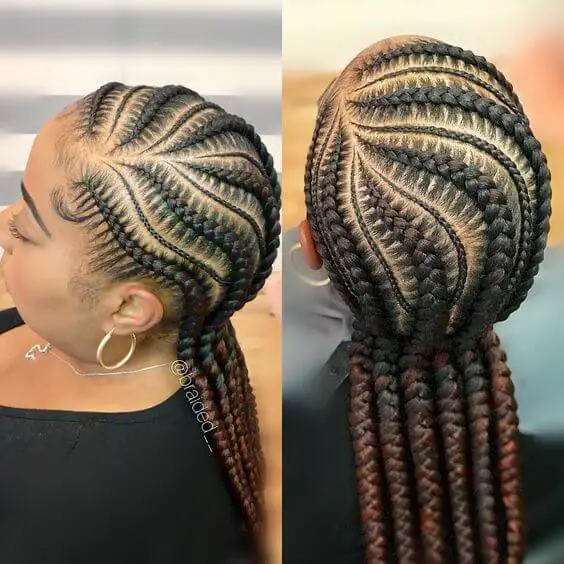
What Are Feed Ins Styles Made With Feed in Hair Extensions
- Begin with a starter braid using your natural hair.
- Extensions (usually Kanekalon synthetic hair) are added in small pieces as you braid, which builds thickness and length gradually.
- Results look more natural and less bulky than traditional extensions.
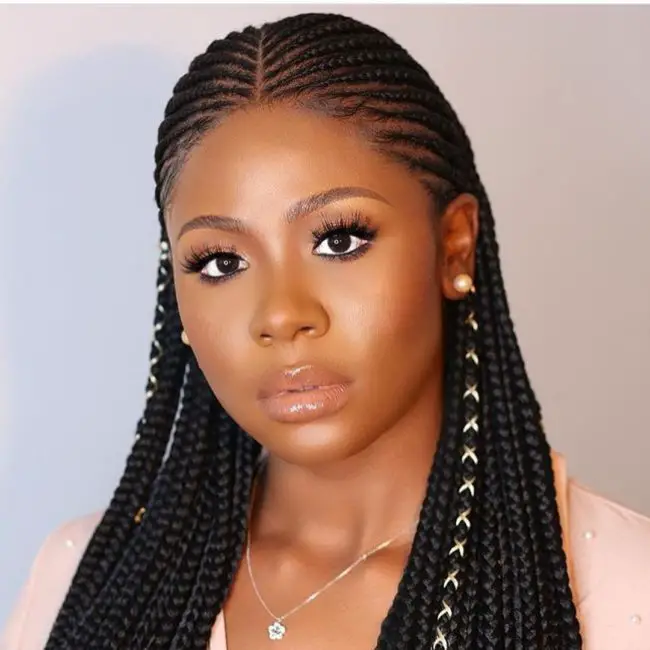
Benefits of Feed-In Cornrows Site:ChickAboutTown.com
- Gentler on the scalp – the gradual addition reduces tension and strain.
- Protective style – helps retain moisture, reduces manipulation, and protects from environmental damage.
- Versatility – ideal for high ponytails, buns, feeds into Cornrows, bob styles, fishtails, Fulani braids, updos, etc.
- Low-maintenance – once installed, braids can last 2–6 weeks with proper care.

Popular Feed In Braids Styles
- Ombré topknots, cornrows with crystals, fishtail ponytails, goddess braids, Fulani styles – celebrities like Quinta Brunson, Yara Shahidi, Beyoncé and Gabrielle Union often sport these.
- Bobs (e.g., Amandla Stenberg), side-swept lobes, high buns/ponytails – provide fun length and dimension.
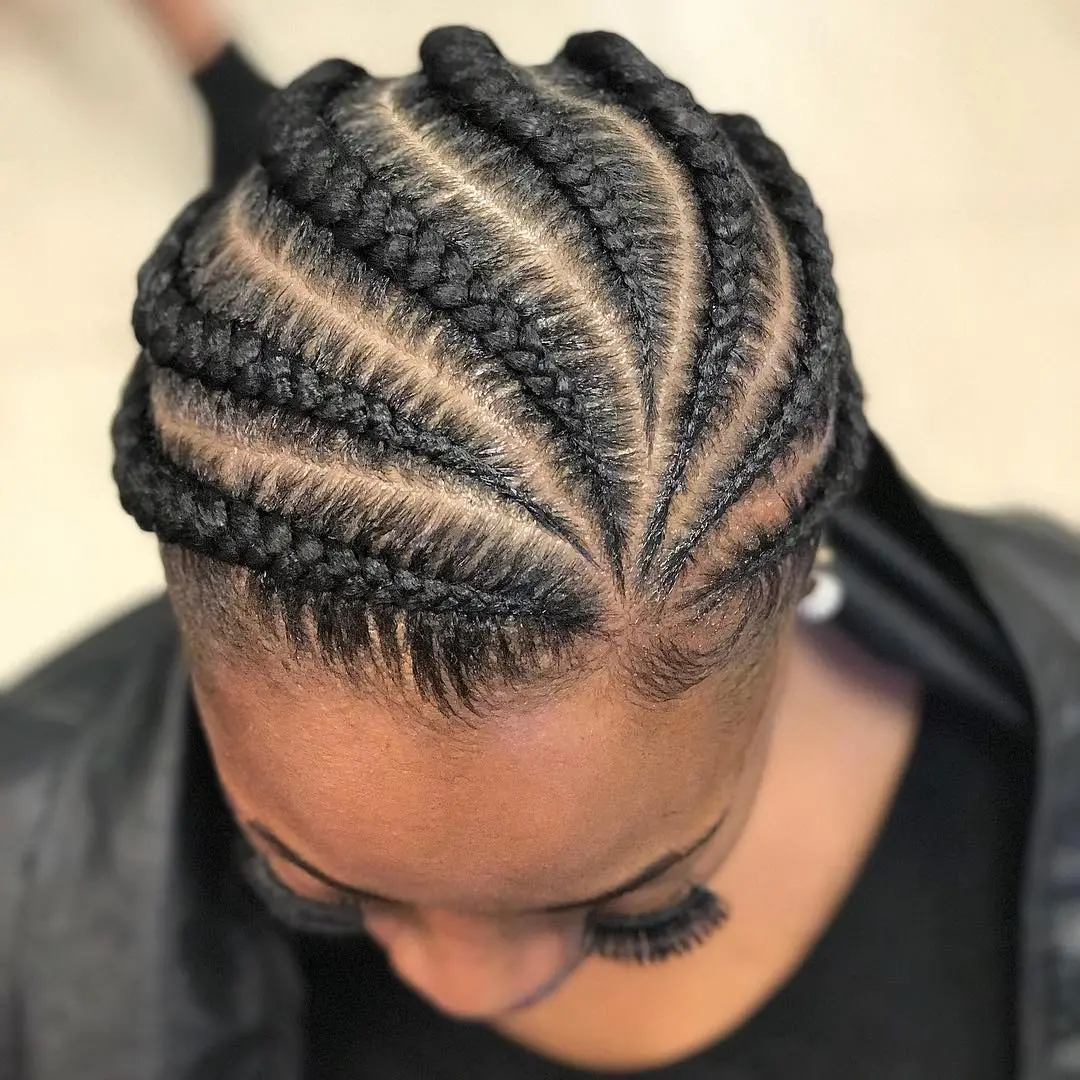
Maintenance Tips
- Prep before styling: Wash, deep-condition, detangle, and moisturize.
- Avoid excessive tension: Too-tight braids can cause scalp pain or hairline thinning.
- Moisturize regularly: Days and nights—use a satin/silk bonnet or scarf, lightweight oils, or leave-in sprays to prevent dryness and frizz .
- Wash your scalp: Use diluted shampoo or foaming cleansers periodically to avoid buildup.
- Take breaks: Remove them gently within 2–6 weeks and give hair a rest before installing another set.
Be Aware
- If installed too tightly, or worn without proper cleaning, they can contribute to breakage, traction alopecia, or scalp discomfort .
- Regular maintenance is key—don’t neglect scalp hygiene or hydration.
Summary
Feed‑in braids merge style and protection.
They create natural-looking, lightweight braids that protect your hair, add length or volume, and offer endless styling options.
When installed with care and maintained right, they offer a chic, healthy, and versatile hairstyle choice—just give your hair the TLC it deserves before, during, and after!
Feed Ins vs Pochohontas Braids
Feed-in braids and Pocahontas braids can both create beautiful, long braided hairstyles, but they describe different aspects of a hairstyle.
Feed-in braids refer primarily to a braiding technique, while Pocahontas braids usually describe a finished look featuring two long braids.
What Are Pocahontas Braids?
Pocahontas braids generally refer to a hairstyle featuring two long braids, one on each side of a centre part, often hanging forward over the shoulders or down the back.
The name is associated with the familiar fictional character’s hairstyle and is used inconsistently across hairstyle guides.
The style can be created using natural hair or extensions.
The two braids may be simple three-strand plaits, or they can incorporate more elaborate braiding techniques.
Common variations include:
- Two long, simple braids.
- Two braids with extensions for added length and thickness.
- Two braids with decorative beads or accessories.
- French-braided or Dutch-braided sections that transition into two long plaits.
- Two braids with a decorative centre part or added detail.
Unlike feed-in braids, the term Pocahontas braids does not specify one particular method of adding extension hair.
Feed-ins vs Pocahontas braids: Key differences
| Feature | Feed-in braids | Pocahontas braids |
|---|---|---|
| What the name describes | The braiding technique | The overall hairstyle |
| Typical appearance | Cornrows lying against the scalp | Two long braids, usually on either side of a centre part |
| Number of braids | Two, four, six or many more | Usually two |
| Extension method | Hair is gradually added as the braid is formed | Depends on the technique chosen |
| Scalp pattern | Often visible rows following the scalp | Usually a centre part with two sections |
| Length | Short, medium or long | Often long |
| Styling options | Straight-back rows, curves, stitch patterns and ponytails | Simple plaits, decorated braids or more elaborate two-braid designs |
Feed Ins Straight Backs Hairstyles

Breakage Natural Hair Site:ChickAboutTown.com
If you would like to know more about breakage in natural hair and what you can do to stop it, click here.
Photo credits: Unruly, Unique Hair Braiding, @PiuMary_Braids, Claudified Hair Studio LLC, Irene’s Braids, Braids by LA