Scene hairstyles men have become a statement of individuality and style, blending bold cuts, layered textures, and eye‑catching colors.
Originally popular in the early 2000s alternative scene, these hairstyles are making a comeback, offering men a way to express personality through creative shapes and striking details.
READ ALSO: How to Cover Gray Roots Without Dyeing Your Whole Hair
Table of Contents
What Scene Hair Looks Like
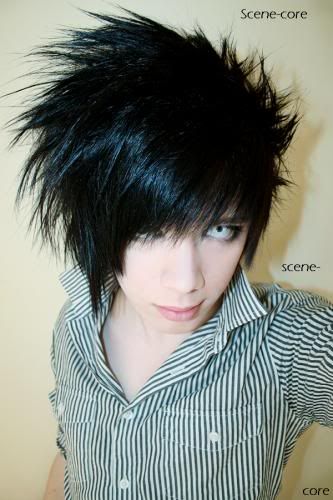
The classic scene haircut is known for:
- Choppy, layered cuts — the hair is cut into uneven layers that create movement and texture rather than lying flat.
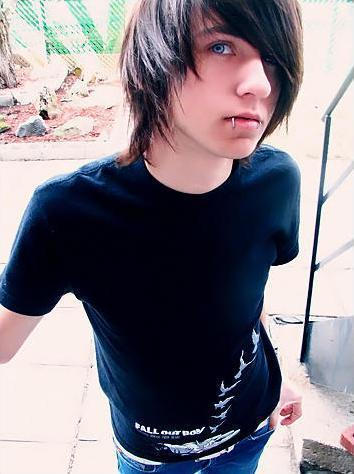
- Side‑swept bangs — often long bangs that are swept across the forehead or partly over one eye.
- Volume and tease — teasing or backcombing near the roots gives the hair lift and bold shape.
- Creative colors — while not mandatory, dramatic dyes like bright blue, pink, or other contrasting tones are part of what made the style memorable.
Scene hair isn’t tightly defined by length, but many classic looks tend to be medium to long on top so there’s room for layers and styling.
Shorter scene hair versions still use angular, choppy layering and side fringes to keep that signature aesthetic.
Popular Scene Hairstyles Men
Here are some versions you might see:
- Classic layered scene cut – Medium‑long hair with lots of razor‑cut layers and a dramatic side fringe.
- Scene mullet – Shorter in front with longer back layers and volume on top.
- Devilock‑inspired version – A shorter cut with a longer front that’s brushed forward or to the side.
- Curly or textured scene – The same layered, voluminous vibe can work with waves or curls too if styled right.
- Bold color highlights or contrasts – Not essential, but striking color choices amplify the scene effect.
Styling Basics for Scene Style Hair for Men
To achieve a scene look:
- Ask your barber for choppy layers rather than a uniform cut.
- Let the top or fringe grow enough to sweep it to the side.
- Use light hairspray or texture powder to boost volume.
- Consider straightening or blow‑drying after washing to add sleek control or extra lift where you want it.
Scene hair is really a form of self‑expression. Some men adapt the aesthetic to suit their natural hair texture and length, while others use color or tools like straighteners to shape the style.
It’s about creating an attitude with your hair as much as the cut itself.
Scene Fashion
Scene fashion is a bold alternative style that first emerged in the early to mid‑2000s as part of a youth subculture tied to online communities and alternative music.
It grew out of emo and punk influences but carved out its own look by embracing vivid colors, expressive hair and makeup, and eye‑catching clothing, all driven by a desire to stand out and showcase individuality.
At its core, scene fashion is about blending playful, rebellious energy with a personal aesthetic.
Bright clothes, especially neon and patterned pieces, were paired with tight silhouettes like skinny jeans and layered tops.
Band t‑shirts, graphic prints and cartoon‑inspired designs helped signal music tastes and personality, while accessories like studded belts, layered bracelets, oversized bows or headbands added visual flair.
Hair and makeup played a big role too: teased or choppy layered hair with bright dye or streaks was iconic, and dramatic makeup — heavy eyeliner or contrasting eyeshadow — completed the look.
Scene fashion was popularized through early platforms like MySpace where young people shared selfies and connected with others who liked similar music and styles.
While the original trend faded by the early 2010s, its influence never fully disappeared.
Elements of scene fashion are surfacing again today as younger generations rediscover or reinterpret them through modern social platforms, blending the old school aesthetic with today’s trends.
Scenecore Hair
Scenecore hair is basically a modern, internet-driven take on the classic scene hairstyle, fitting into the broader scenecore aesthetic that’s popular on platforms like TikTok and tied to Y2K nostalgia.
It builds on the bright, expressive looks of early 2000s scene culture but often mixes in influences from rave, hyperpop, and other online alternative styles.

Here’s what that means in practice:
- Color and contrast — Bright, neon or rainbow-inspired colors are much more common in scenecore looks than in older scene looks. Someone might choose multi-colored dye jobs or bold combinations that really stand out.
- Playful vibe — The overall idea is expressive and “extra,” influenced by online culture, internet art like glitter graphics and checkerboard prints, and maximalist fashion elements.
- Layered or creative cuts — Scenecore hair can still use choppy layers or asymmetrical shapes similar to traditional scene hair, but there isn’t a strict rule. Some people embrace fluffy, spiky, or blended textures rather than the big-volume teased look of the 2000s.
- Not required to have classic scene hair — Unlike the original scene subculture (where that iconic teased and layered cut with side bangs was a central part of the look), people who identify with scenecore might combine any bold hairstyle with the rest of the scenecore fashion and colors.

So scenecore hair connects strongly with the scenecore aesthetic — which is about bright, nostalgic, internet-influenced looks — while the original scene hair was a specific 2000s hairstyle with choppy layers, high volume, and dramatic side-swept bangs.
Photo Credit: WikiHow, Deviant Art