Dark skinned Vietnamese women are part of the country’s rich tapestry of natural beauty, with skin tones ranging from medium brown to deeper shades, particularly in southern regions and among ethnic minority communities. While these natural variations are common, cultural attitudes and long-standing beauty norms have shaped how darker complexions are seen and valued across Vietnam.

READ ALSO: Best Way to Remove Chin Hair for Women Over 40
Table of Contents
Diversity in Appearance
Vietnamese people don’t all look the same. Many have skin tones that range from light (more common in the north) to warm olive or deeper hues toward the south — partly due to climate and sun exposure differences.
That means there are Vietnamese women with darker, naturally tan complexions just as there are those with lighter skin.
Traditional Beauty Ideals
For centuries in Vietnam, lighter skin has been tied to cultural beauty ideals and social status. Historically, pale skin was seen as a sign that a person didn’t have to work outdoors in the sun, so it became associated with higher class and feminine beauty. Because of this, many women avoid direct sunlight, use umbrellas and wear long sleeves, and popular beauty products often focus on skin‑brightening rather than tanning.
Because of these long‑standing preferences, women with darker skin tones may at times feel less aligned with the mainstream ideal. But this is a cultural standard — not an absolute — and it doesn’t mean darker skin isn’t beautiful or doesn’t exist naturally in Vietnam. There’s growing conversation within Vietnamese society about embracing a broader range of appearances.
Shifts and representation
In recent years, figures like H’Hen Niê — a woman with a darker complexion from an ethnic minority group who achieved international recognition — have helped challenge narrow ideas about beauty in Vietnam and encouraged more acceptance of diverse skin tones and features.
Everyday Life and Experiences of Dark Skinned Vietnamese Women
Because lighter skin has been widely preferred socially, some darker‑skinned Vietnamese women choose cosmetics and clothing strategies that highlight or complement their skin tone — for example wearing colours that contrast beautifully with warmer skin.
In summary, there are indeed dark‑skinned Vietnamese women and people with a variety of natural skin tones. Cultural attitudes have historically favoured lighter skin, but beauty standards are evolving and many people today celebrate diversity in appearance.
Countries with Dark Skinned People
People with naturally dark skin tones live in many parts of the world. Skin colour is influenced by melanin, the pigment that protects skin from strong sunlight.
Groups that evolved in regions close to the equator, where UV radiation is intense, tend to have higher melanin and thus deeper skin tones.
Here are some countries and regions where dark‑skinned populations are common:
1. African countries
Most nations in Sub‑Saharan Africa have large populations with deep, dark skin tones, shaped by long‑term adaptation to high UV levels and genetic diversity across ethnic groups.
Examples include:
- South Sudan, where many people, especially from groups like the Dinka and Nuer, have some of the darkest skin tones in the world.
- Nigeria, with many Yoruba, Igbo, and Hausa people who have rich brown to very dark skin.
- Senegal, Ghana, Uganda, Kenya, Malawi, Zimbabwe, Rwanda, Tanzania, and others across Africa also have large populations with dark skin. This is especially true in equatorial and tropical regions.
2. Oceania and Melanesia
Countries like Papua New Guinea are home to Melanesian peoples with very dark skin tones, adapted to tropical climates.
3. South Asia (Dark Skin Asian Countries/Dark Asian)
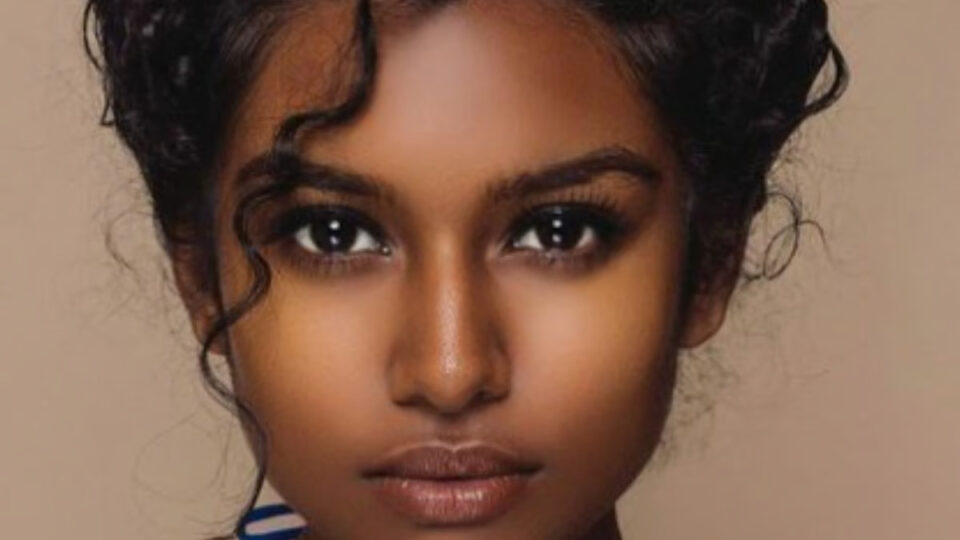
Parts of South Asia — including India, Pakistan, Bangladesh, Sri Lanka and Nepal — have a wide diversity of skin tones, with many communities exhibiting medium to dark brown skin.
In India, southern states like Tamil Nadu and Kerala have many people with deeper skin tones.
4. Indigenous Islands and Smaller Groups
The Andamanese people of the Andaman Islands (India) are an example of indigenous communities with very dark skin, shaped by thousands of years in their environment.
5. Latin America and the Caribbean
In countries with large populations of African descent — such as Brazil, Haiti, Jamaica, and other Caribbean nations — many people have dark skin. Brazil, in particular, has the largest African diaspora, with deep skin tones in many regions.
Why These Patterns Exist
Dark skin evolved as a helpful adaptation in regions with intense sunlight and strong UV radiation.
Higher melanin levels help protect skin from UV damage while still allowing the body to make vitamin D. Over generations, this led to populations in equatorial and tropical zones developing darker skin.
Overall, while there is great diversity in skin tones everywhere, there are many countries where dark skin is common or predominant — especially across Africa, parts of South Asia, Oceania, and the Caribbean — reflecting how human populations adapted to their environments over thousands of years.
Photo Credits: LZ, @KimlyCurry