Hair loss treatment is something many people start searching for the moment they notice more strands in the shower, a widening part, or a receding hairline.
While losing some hair each day is completely normal, excessive shedding or thinning can affect your confidence and leave you wondering what actually works.
The good news is that there are many effective ways to slow hair loss, encourage new growth, and improve the overall health of your hair.
From proven medical options to lifestyle changes and supportive hair care routines, finding the right solution often depends on the underlying cause of your hair loss.
In this post, we’ll explore some of the best hair loss treatments available and help you understand which approaches may be most effective for your needs.
READ ALSO: Amazing Jojoba Hot Oil Treatment 2025
Table of Contents
READ ALSO: The Truth About Rogaine Weight Gain 2025
Best Hair Loss Treatment #1: Medications
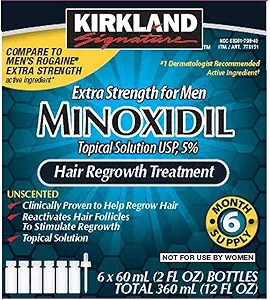
Medications are one of the most common treatments for hair loss. Two medications approved by the FDA for treating hair loss are minoxidil and finasteride.
READ ALSO: Unveiling the Truth About 4 MCT Oil Side Effects: Separating Fact from Fiction
Minoxidil
Minoxidil is a topical solution that is applied directly to the scalp. It works by increasing blood flow to the hair follicles, which stimulates hair growth.
Finasteride is an oral medication that blocks the production of DHT, a hormone that contributes to hair loss.
It is more effective for men and is not recommended for use by women.
Minoxidil is available over-the-counter and can be easily applied to the scalp. The solution is applied twice daily, and it can take up to 16 weeks to see results.
Finasteride, on the other hand, requires a prescription from a doctor. It is a daily oral medication that is taken for several months to see results.
Both medications have been shown to be effective in treating hair loss, but they do have some potential side effects.
Minoxidil can cause scalp irritation and itching, while finasteride can cause sexual side effects, such as decreased libido and erectile dysfunction.
READ ALSO: Accurately, What Is a Light Shampoo Today in 2025?
Best for Hair Loss Treatment #2: Hair Transplantation
Hair transplantation is a surgical procedure that involves moving hair from the back or sides of the head to the balding areas.
The procedure is done under local anesthesia and is typically an outpatient procedure. Hair transplantation can produce natural-looking results, and the transplanted hair will continue to grow as it would have in its original location.
However, it can be expensive and requires a skilled surgeon to perform the procedure.
The procedure involves removing hair follicles from the donor area and transplanting them into the balding areas of the scalp.
The transplanted follicles will grow hair naturally, and the results are permanent.
Hair transplantation can be a highly effective treatment for hair loss, but it does require a significant investment of time and money.
READ ALSO: Ketoconazole Side Effects Today in 2026 & More: The Good, The Bad, and The Ugly
3. Low-Level Laser Therapy
Low-level laser therapy (LLLT) is a non-invasive treatment that involves using a device that emits low-level laser light to the scalp. This therapy has been shown to improve hair density and thickness.
LLLT works by increasing blood flow to the hair follicles, which stimulates hair growth. It is a painless procedure and can be done at home with a handheld device or in a clinic setting.
Photo credits: HairMD