Table of Contents
READ ALSO: On Choosing White Wine
Chardonnay vs Sauvignon Blanc/Difference Between Chardonnay and Sauvignon Blanc/Sauvignon Blanc vs Chardonnay/Sauvignon vs Chardonnay
Chardonnay and Sauvignon Blanc are two popular white wine varietals that offer distinct flavor profiles and characteristics. Here’s a comparison between Chardonnay and Sauvignon Blanc:
Chardonnay
Chardonnay is one of the most widely planted and recognized white wine grapes worldwide. It is known for its versatility, as it can be crafted into a range of styles, from crisp and unoaked to rich and buttery.
Here are some key features of Chardonnay:
- Flavor Profile: Chardonnay typically offers a range of flavors depending on the winemaking techniques employed. In cooler climates, Chardonnay tends to exhibit crisp acidity with flavors of green apple, citrus, and tropical fruits. In warmer climates and when aged in oak, it can develop flavors of ripe orchard fruits, vanilla, butter, and toast.
- Body: Chardonnay can have a medium to full body, with a smooth and sometimes creamy texture. Oak aging can contribute to a fuller-bodied style.
- Oak Aging: Chardonnay is often aged in oak barrels, which can impart flavors of vanilla, caramel, and spice. The level of oak influence varies, ranging from wines that showcase subtle oak nuances to those with pronounced oak characteristics.
- Food Pairing: Chardonnay’s versatility makes it suitable for a wide range of food pairings. Crisp, unoaked Chardonnays pair well with seafood, salads, and lighter dishes, while richer, oak-aged Chardonnays complement creamy pastas, roasted poultry, and seafood with butter-based sauces.
Sauvignon Blanc
Sauvignon Blanc is a refreshing and aromatic white wine that is grown in many wine regions around the world. It is known for its vibrant acidity and distinct herbaceous and fruity characteristics.
Here are some key features of Sauvignon Blanc:
- Flavor Profile: Sauvignon Blanc typically exhibits intense aromas and flavors of citrus fruits (such as grapefruit and lime), green apple, tropical fruits, and sometimes herbaceous notes like grass, green bell pepper, and gooseberry. It is known for its bright, refreshing, and crisp profile.
- Acidity: Sauvignon Blanc is often high in acidity, which contributes to its zesty and refreshing character.
- Unoaked Style: Many Sauvignon Blancs are fermented and aged in stainless steel tanks or neutral vessels to preserve their vibrant fruit flavors and maintain a pure expression of the grape variety.
- Food Pairing: Sauvignon Blanc’s lively acidity and citrusy flavors make it an excellent accompaniment to a variety of dishes. It pairs well with seafood, salads, goat cheese, fresh vegetables, and lighter fare such as grilled chicken or fish.
To put that side by side in a table:
| Chardonnay | Sauvignon Blanc | |
| Flavor Profile | Green apple, citrus, tropical fruits, vanilla, butter, toast | Citrus fruits, green apple, tropical fruits, herbaceous |
| Body | Medium to full body | Light to medium body |
| Oak Aging | Often aged in oak, varying levels of oak influence | Typically unoaked or neutral vessels |
| Acidity | Moderate to high acidity | High acidity |
| Aroma | Varies depending on style: crisp, oaky, fruity | Intense, vibrant, herbaceous |
| Food Pairing | Versatile: seafood, salads, poultry, creamy pastas | Seafood, salads, goat cheese, fresh vegetables, grilled fish |
Please note that this table provides a general overview of the characteristics of Chardonnay and Sauvignon Blanc, but individual wines may vary in their specific flavor profiles and styles.
Chardonnay vs Pinot Grigio/ Pinot Grigio vs Chardonnay/Chardonnay vs Pinot Gris
The main differences between chardonnay and pinot grigio are:
- Chardonnay comes from green-skinned grapes, while pinot grigio comes from grey-blue grapes.
- Chardonnay is usually a creamy wine with a freshly cut grass aroma, while pinot grigio is usually sour and light.
- Chardonnay is considered a more complex wine, while pinot grigio is a smooth wine.
READ ALSO: What Are Sauvignon Blanc & Pinot Grigio Wines?
Difference Between Pinot Grigio Chardonnay and Sauvignon Blanc/Difference Between Chardonnay and Pinot Grigio
Like Chardonnay, Sauvignon Blanc is a white wine with assorted flavors.
When it comes to sauvignon blanc vs pinot grigio, sauvignon blanc is slightly less popular than both chardonnay and pinot grigio, but not due to any fault of its own. It simply didn’t gain international fame until the 1980s.
In fact, some chardonnay and pinot grigio drinkers may be surprised to find they even prefer sauvignon blanc after taking a chance on this crisp, zesty wine.
READ ALSO: Incanto Chardonnay Pinot Grigio & More on White Wine
Pinot Grigio vs Sauvignon Blanc/Sauvignon Blanc vs Pinot Gris/Pinot Gris vs Sauvignon Blanc
The key difference between sauvignon blanc and pinot grigio are the aromatics.
Sauvignon Blanc is more aromatic (it jumps out of the glass into your nose more) than pinot grigio.
Pinot grigio is distinct in being quite neutral.
Now that you know the difference between chardonnay vs sauvignon blanc vs pinot grigio, let’s add another wine to the mix: pinot blanc.
READ ALSO: On The Body of White Wine & The Grapes Used to Make It
Pinot Blanc vs Pinot Gris
Pinot Blanc and Pinot Gris are both white wine grape varieties that are believed to have originated in the Burgundy region of France. While they share some similarities, there are also some notable differences between the two.
Pinot Blanc is a white grape variety that is known for its light body, crisp acidity, and fresh fruit flavors.
It is believed to be a mutation of Pinot Noir, which is a red grape variety.
Pinot Blanc is grown in many wine regions around the world, including France, Germany, Italy, and the United States.
One of the key differences between Pinot Blanc and Pinot Gris is the color of the grapes. Pinot Blanc grapes are green in color, while Pinot Gris grapes are a pinkish-grey color. This difference in color also translates to differences in flavor and aroma.
Pinot Gris, also known as Pinot Grigio in Italy, is a white grape variety that is known for its rich, full-bodied texture and complex flavors. It is grown in many wine regions around the world, including France, Italy, Germany, and the United States.
Pinot Gris has a distinct aroma that is characterized by notes of ripe fruit, honey, and spice. On the palate, it has a rich, full-bodied texture with flavors of stone fruit, citrus, and honey.
The wine can be made in a range of styles, from dry to sweet, depending on the winemaking process.
Pinot Blanc, on the other hand, is known for its fresh, crisp flavors that are often characterized by notes of green apple, lemon, and pear.
It has a light to medium body and is typically lower in alcohol than Pinot Gris.
Pinot Blanc is often used as a blending grape in sparkling wines, where it contributes to the wine’s acidity and crispness.
In terms of food pairings, Pinot Gris is often paired with rich, flavorful dishes such as roasted meats, creamy pasta dishes, and spicy Asian cuisine. Pinot Blanc, on the other hand, pairs well with lighter, more delicate dishes such as seafood, salads, and grilled vegetables.
In conclusion, Pinot Blanc and Pinot Gris are both white wine grape varieties that have some similarities but also some distinct differences. While Pinot Blanc is known for its light body and fresh fruit flavors, Pinot Gris is known for its rich, full-bodied texture and complex flavors.
Both wines can be enjoyed with a range of food pairings and are grown in many wine regions around the world.
Pinot Blanc vs Chardonnay
Pinot Blanc and Chardonnay both have their origins in the French region of Burgundy. Pinot Blanc is a much less popular wine than Chardonnay.
The pinot blanc grape is a white mutation of the pinot grigio grape, which itself is a grayish mutation of pinot noir grapes.
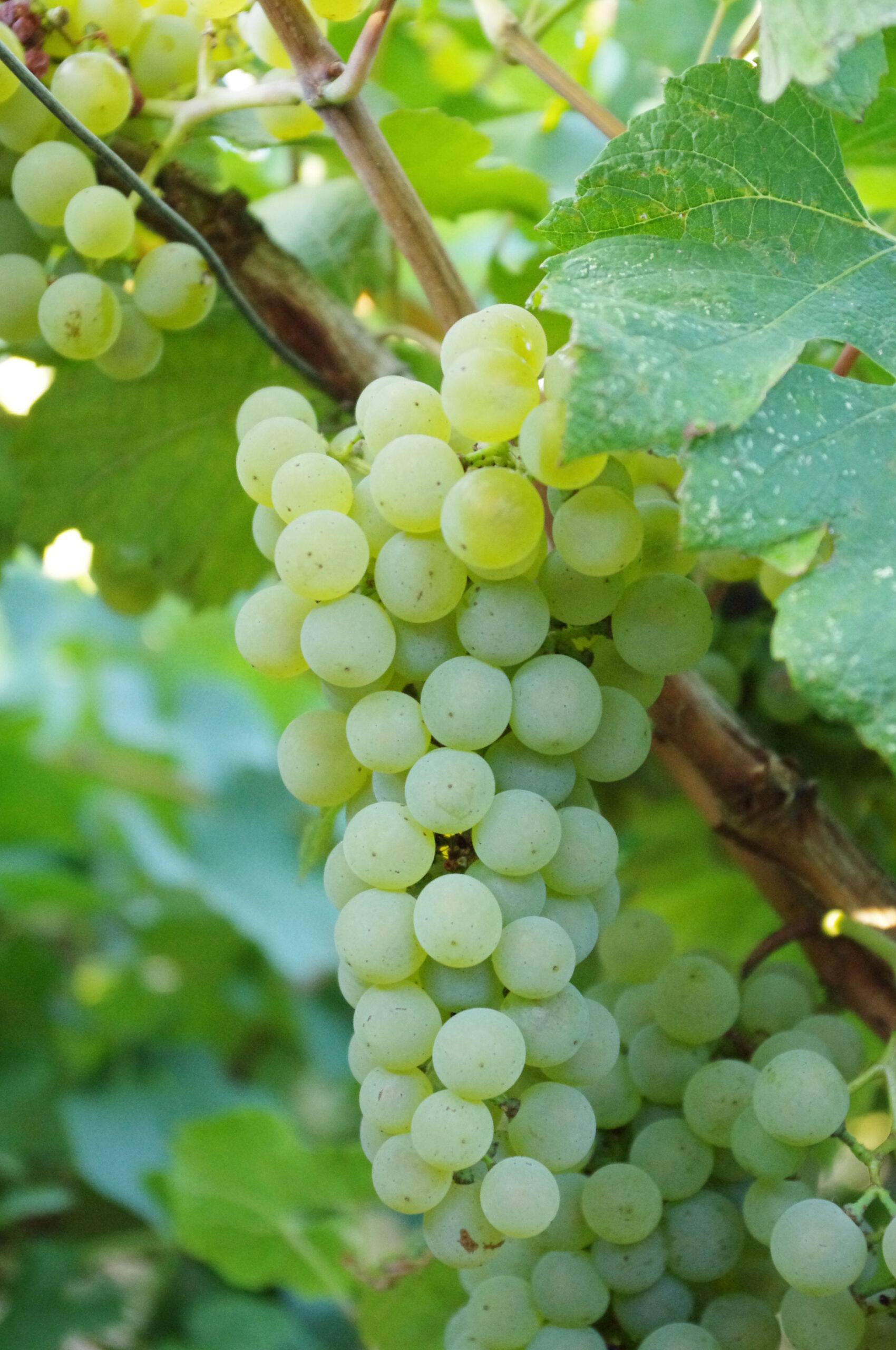
To the eye, chardonnay grapes, an early-ripening variety, take a golden-green color upon maturation, while pinot blanc grapes generally attain a beautiful grass green color with good acidity.
Both chardonnay and pinot blanc take well to oak maturation, but the resulting wines tend to have quite different characters.
Chardonnay wine tends to have a more neutral flavour, otherwise it may also have flavours of tropical fruits, stone fruit, citrus and apples.
Pinot blanc wines, though, tend to be medium- to full-bodied wines with good acidity and flavours of apples and almonds.
What Is Chardonnay?
Chardonnay, one of the most popular types of white wine, is made from green chardonnay grapes. Although, chardonnay grapes originate from Bordeaux in France, they are now grown wherever wine is produced, from England to New Zealand.
The Chardonnay grape itself is neutral, with many of the flavors commonly associated with the wine being derived from such influences as terroir—where and how its grown—and oak.
Chardonnay grapes can be turned into wine of many different styles, from the lean, crisply mineral wines of Chablis, France, to New World wines with oak and tropical fruit flavors.
Pinot Grigio Chardonnay Blend
Chardonnay is a common type of white wine that is made from green grapes, and Pinot Grigio (or Pinot Gris) is a type of white wine made from grey-blue grapes. A Chardonnay Pinot Grigio is simply a white wine made from a blend of each of these wines.
The proportion of the blend is not important to the appellation, so a Chardonnay Pinot Grigio wine can range from being a simple white wine to a more complex sparkling wine.
Since both types of white wine used to make this blend occur in many parts of the wine-producing world, it’s not surprising, therefore, that Chardonnay Pinot Grigios are produced in many parts of the world, including Italy, the US, and Australia.
Photo Credits: Total Wine & More, Saggittarius A

