Kanga in English: 4 Different Interesting Explanations & More

Did you come to this post wondering about the word kanga in English?

If so, you are in the right place.

Let’s begin with what to call the East African fabric kanga in English.

READ ALSO: The Secret Attraction: What Role Does God Play?

READ ALSO: 9 Interesting Kenyan Sayings in Swahili & More

What Is Kanga in English?/Kanga Meaning/Khanga in English

Quite simply, the East African fabric kanga/khanga remains kanga/khanga in English too.
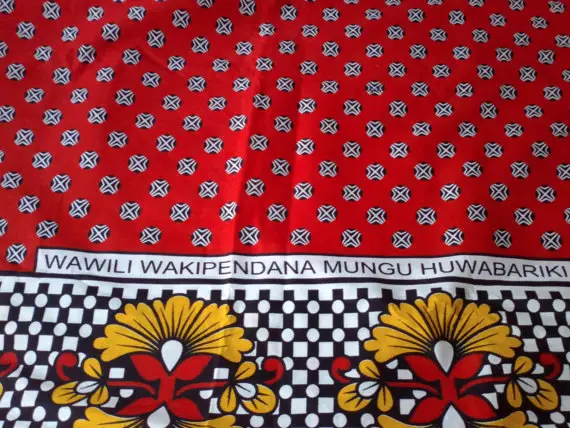
Kanga in English remains kanga
The Swahili fabric kanga remains kanga in English, or khanga (alternate spelling).

READ ALSO: How Exactly to Say Architect in Swahili Correctly in 2026 & More About Swahili Culture and Architecture

Kangaa Meaning

Kanga is an East African cotton fabric with bold designs, bright colors, and a Swahili saying, aphorism, or slogan printed along its bottom border (see the image above).

+Kanga Kororo in Engilish

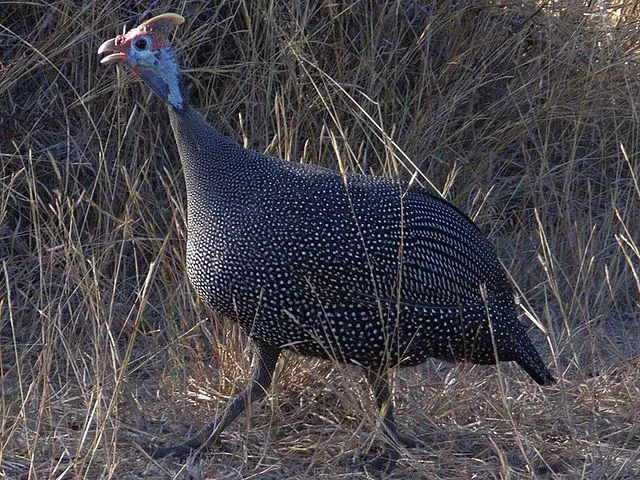
If by “kanga kororo” you mean the Swahili names for guinea fowl, then kanga and kororo refer to types of guinea fowl, but they are not quite interchangeable.

  • Kanga = guinea fowl, especially the common or helmeted guinea fowl.
  • Kororo = crested guinea fowl, a different type characterized by a prominent dark crest on its head.

So, in English, kanga kororo would most naturally be understood as crested guinea fowl if kororo is the word you are referring to.

What Does a Kororo Look Like?

The crested guinea fowl is an African bird with:

  • A dark, feathered crest on top of its head
  • A bluish or blue-grey bare neck
  • A mostly dark body covered with small white spots
  • A body shape similar to the more familiar guinea fowl

The scientific name generally associated with the crested guinea fowl is Guttera pucherani.

Older Swahili terminology specifically describes kororo as a crested guinea fowl, while kanga is used for the more common guinea fowl.

Kanga vs. Kororo

SwahiliEnglishMain distinction
KangaGuinea fowl / helmeted guinea fowlHas the familiar bare, helmet-like head
KororoCrested guinea fowlHas a conspicuous feathered crest

One potential source of confusion is that “kanga” is also the name of the East African rectangular printed cloth worn as clothing.

In a bird context, however, kanga means guinea fowl.

So if someone in Tanzania or elsewhere in East Africa says “kororo” when talking about a bird, “crested guinea fowl” is the more precise English translation.

Meaning of Kanga in English

In Australia, the word kanga is used informally to mean kangaroo.

Kanga in English is an informal way, in Australia, to refer to a kangaroo

Kanga is also another word for a prison warder.

Kanga Mount in English

Mount Kanga is a mountain in Tanzania’s Nguru Mountains, in Mvomero District, Morogoro Region. It is also associated with the rare cycad Encephalartos kanga.

Kanga Ndege in English

If you are looking for a translation of the Swahili word kanga, and you don’t mean the fabric but the bird, then the word you are looking for is guineafowl

ndege kanga in English is guinea fowl
This type of kanga is guineafowl in English.

Do these two Swahili meanings of kanga have any connection?

Absolutely!

The fabric kanga got its name from the guineafowls that were (and still often are) printed on it.

Now you know!

READ ALSO: Accurately, Jumamosi in English Today in 2026 & More

Another Name for Kanga in English

If you’re looking for another name for kanga in English, there isn’t a perfect English translation because “kanga” itself is an established English word for this particular East African textile.

See also  Slipway Beach Dar es Salaam & 3 Interesting Hotels in the City

English dictionaries list kanga as the name of the garment.

However, you can describe it in English in several ways:

  • East African wrap — probably the clearest general description.
  • Wrap cloth or wraparound cloth — describes how it is commonly worn.
  • Printed cotton cloth — describes the material and appearance.
  • East African printed cloth — useful when explaining what a kanga is to someone unfamiliar with it.
  • Shawl — sometimes appropriate when a kanga is worn over the shoulders, although it isn’t a precise synonym.
  • Sarong — sometimes used as a rough comparison because both are wrapped around the body, but a kanga is culturally and structurally distinct from a typical sarong.

There are also alternative names rather than English translations. Khanga is simply a variant spelling of kanga, while leso (or lesso) is another East African name for the cloth. Oxford specifically lists khanga and leso alongside kanga.

Kaanga in English

The word “kaanga” in English comes from Swahili and is a verb meaning “to fry” (that is, to cook food in hot oil or fat).

For example, if someone says nenda ukaange mayai, it means “go fry some eggs.”

In Swahili grammar, many verbs change form with prefixes depending on tense or subject, but the basic idea of kaanga relates to frying or cooking something by frying.

So in straightforward English, kaanga = fry (as a cooking action).

Canga em Ingles

A expressão “canga em inglês” geralmente é usada por pessoas que querem saber como traduzir a palavra portuguesa canga para o inglês. A resposta depende muito do contexto, porque a palavra tem mais de um significado.

O significado mais comum atualmente, especialmente no Brasil, refere-se ao tecido leve e colorido usado na praia.

Nesse caso, as traduções mais próximas em inglês são “beach wrap”, “sarong” ou, em alguns contextos, “pareo”. Trata-se daquela peça versátil que pode ser usada como saia, vestido improvisado, xale, toalha de praia ou até mesmo manta para piqueniques.

As cangas são muito populares nas praias brasileiras devido à sua praticidade. Elas são leves, ocupam pouco espaço e podem ter inúmeras utilizações.

Muitas apresentam estampas tropicais, cores vibrantes e desenhos inspirados na cultura brasileira, tornando-se também um item de moda e lembrança turística bastante procurado.

Por exemplo:

  • Ela colocou uma canga antes de sair da praia.
    She put on a sarong before leaving the beach.
  • Comprei uma canga estampada em Copacabana.
    I bought a colorful beach wrap in Copacabana.

Entretanto, existe um significado mais antigo da palavra. Em contextos rurais e agrícolas, canga pode significar “yoke”, que é a peça de madeira usada para unir bois ou outros animais de tração.

Esse é o significado tradicional encontrado em muitos dicionários bilíngues.

Por exemplo:

  • Os bois estavam presos à canga.
    The oxen were attached to the yoke.

Além disso, em sentido figurado, tanto em português quanto em inglês, a ideia de yoke pode representar um peso, uma opressão ou uma obrigação difícil de suportar.

Portanto, quando alguém procura por “canga em inglês”, a tradução correta normalmente será:

  • Sarong
  • Beach wrap
  • Pareo

quando se fala da peça de praia, ou

  • Yoke

quando se fala do equipamento agrícola usado com animais de tração.

What Is a Kanga?

A kanga (also spelled khanga and often called a leso in Kenya) is a brightly colored rectangular cotton cloth that is widely worn and used across East Africa, especially in Kenya, Tanzania, and Uganda. It is one of the most recognizable textiles in the region and is valued not only as clothing but also as a form of cultural expression.

A traditional kanga has three main features:

  • A decorative border around all four sides, known as the pindo.
  • A central design area called the mji.
  • A Swahili phrase, proverb, or message printed on the fabric. This message is often called the jina or ujumbe.

One of the things that makes a kanga unique is that the printed saying often carries a message. Some messages express love, friendship, encouragement, faith, or advice, while others can communicate disappointment, warnings, or social commentary. Because of this, kangas are sometimes described as “the cloth that speaks.”

See also  How to Express Costume in Swahili Accurately Today in 2026 & More

Kangas are usually sold as matching pairs. Women commonly wear one around the waist and another over the shoulders or head.

They are also used as baby carriers, head wraps, aprons, shawls, blankets, household coverings, and gifts for weddings, birthdays, and other important occasions.

A typical kanga message might read:

Mkipendana mambo huwa sawa
“Everything is all right if you love each other.”

The kanga has been part of East African culture for well over a century and remains an important symbol of Swahili heritage, identity, communication, and everyday life.

Kangha in English

Kangha in English refers to a small comb, most often associated with Sikhism, a religion that started in the Punjab region of South Asia. It is not just an ordinary comb — it has both a practical use and a symbolic meaning within the Sikh faith.

Here’s what kangha means and why it matters:

1. A physical object
A kangha is a small comb, traditionally made from wood (though modern ones can also be made from other materials). It’s sized so that it can be kept in the hair under a turban or head covering.

2. One of the Five Ks
In Sikh practice, the kangha is one of the Five Ks — five articles of faith that baptized Sikhs (members of the Khalsa) are commanded to wear at all times. The other four are uncut hair (kesh), a steel bracelet (kara), special undergarments (kachera), and a ceremonial sword (kirpan).

3. Practical daily use
Sikhs are meant to use the kangha regularly to comb their hair at least twice a day. This helps keep the hair neat, clean, and free of tangles. The comb isn’t just decorative — it’s a tool for everyday grooming.

4. Symbolic meaning
Beyond grooming, the kangha carries spiritual meaning. It symbolizes cleanliness, discipline, and order — qualities that Sikhs aim to reflect in their lives. Keeping the hair tidy with the kangha is a reminder to keep one’s life orderly and respectful of the body as a gift.

In simple English, a kangha is a comb that Sikhs carry and use to care for their uncut hair. It is both a practical grooming tool and a religious symbol representing cleanliness and self-discipline.

Shanga in English

Shanga is both the singular and plural word for ‘bead’ in Swahili.

Depending on the context, shanga can also be used to refer to strings of beads worn around the waist, also known as waist beads.

Kanga English Meaning

Other than the East African fabric, kanga in English can mean a couple of other things. 

कंगवा Meaning in English/Kangva in English

कंगवा is the Marathi word for comb.

Njiwa in English

Would you like to know what njiwa another bird name in Swahili means? If so, it would be my pleasure to tell you. Njiwa is the Swahili word for both pigeon & dove

The rest of this post is about kanga, the fabric.


For as long as I can remember, I have always been a great lover of kanga, the popular Swahili fabric.

How to Wear a Kanga

If you’ve ever seen children wearing kanga wrapped around their bodies and tied behind their necks, then you have a perfect picture of me as a child.

If you were to drop by my house unannounced today and I didn’t have a chance to run and change into something “decent”, then chances are you would find me in a kanga, though this time worn in the kifua style (wrapped around my body, passing under my arms), rather than tied behind my neck.

See also  11 Interesting East Africa Pictures & More

Why?

For several reasons.

First of all, there’s nothing quite as comfortable as a soft, well-worn, 100%-cotton kanga.

Not sweats.

Not a boubou.

Nothing!

In the Dar es Salaam heat, how better to keep cool? (To be honest, though, it’s not really about the heat. Even in the dead of Canadian winter, I’d crank up the heat so that I could wear a kanga at home. 🙂 )

Tanzanian Women in Kanga

Also, the bright colors and ornate patterns of kanga somehow always manage to give me an instant mood lift.

Kanga Words

Recently, my love for kanga has taken on a new dimension.

Beyond the reasons mentioned above, I’ve now also come to appreciate kangas for their jina (‘name’ in Swahili), which is what the writing on a kanga is called.

Care to know how that happened?

Here goes.

Some years ago, I found that I greatly enjoyed wearing a green and white kanga that I had nipped from my mother ;-).

This was unusual for two reasons: first, I don’t generally like green (especially on clothing) and second, the kangas design was rather plain.

My pleasure in wearing this kanga came from what was written on it, its jina, which read: Mlisema hayawi mbona yamekuwa? (Translation: You said it doesn’t/wouldn’t happen, so how come it did?).

Although this didn’t point directly to something that had already taken place in my life; at the time, I was living an unconventional life, working towards seemingly impossible goals.

I hoped, of course, that I would one day achieve these goals and then be able to ask this question to all the naysayers I’d met along the way.

The kanga’s jina was feisty…and I LOVED it!

From then on, kanga for me ceased to be just about aesthetics and became, too, a form of expression and communication like they have been for countless Swahili-speaking women since the early twentieth century.

African kanga cloth

Swahili Kanga Sayings Today

A short while ago, I found myself on Uhuru Street, which arguably has the widest selection of kanga in Dar es Salaam.

Although I wasn’t really kanga shopping, I decided to look around and see what was new in the world of kangas.

After discovering some shocking jinas the last time I was kanga shopping, that’s what I decided to focus on this time.

The first thing I noticed was an unusual number of kangas with Islamic jinas, such as Mungu tuzidishie imani tufunge mwezi wa Ramadhani (translation: God, increase our faith so that we fast during the month of Ramadan).

I then remembered my brother telling me, the night before, that the next day would be the first day of Ramadan. (On that note, I wish a successful and spiritually-rich month of Ramadan to all my Muslim readers!). Other jinas that caught my attention were:

  • Mzoea nazi samli haiwezi (A person used to coconut oil cannot handle ghee)
  • Sibora kitu bora utu (Being humane is better than material things)
  • Ukijua kupokea ujue na kutoa (If you know how to receive, then know too how to give)
  • Usiniwekee majungu bahati kanipa mungu (Don’t spread rumors about me, my luck is God-given.)
  • Njama nimezisikia nangojea vitendo (I’ve heard the evil plans, now I await the actions)
  • Msemaukweli ni mpenzi wa mungu (A person who tells the truth is God’s darling.)
  • Niko kwangu yanini majungu (I’m in my own home, so why all the nasty rumors?)
  • Tuliza roho yako mimi ni wako (Calm your spirit; I am yours)
  • Mema na mabaya yapo lakini tusamehane (The good and the bad exist, but let’s forgive each other)
Women in Kanga

Photo credits: Wikipedia; Tanzania Blog; PanBK at the English-language Wikipedia, eboy, jamiiforums.comMiwani for Mwanza Mission

15 comments

  1. Hiya Biche,

    I have recently fallen in love with African prints and fabrics, and among these the kanga. I have to say that given my poor grasp of Swahili, I look mostly to the print. Further, as opposed to you, I have my tailor make me something, which means the words are usually hidden or that piece of fabric cut off; I guess I should start urging my tailor to let the words feature prominently from now on (and also make more effort to find out what the ‘jina’ is).

    Anyway, kangas are indeed beautiful, and I wish I could go kanga shopping myself but alas, I have to rely on assorted relatives from when they travel to Dar. I suppose there is a place in Kampala but I would imagine the variety is not as wide!

  2. Hey Biche, I beg you!!!! when u next see the one that says Calm your Spirit am yours… please get it for me so i can wear it special for Tata Boy (your BIL). Otherwise you know i have started collecting Kangas… they are just a delight and Comfortable!!!!! they have replaced Nightgowns (too much detail here?) wa they are too comfortable….I am yet to have my first outfit made out of them…. the one i ordered didn’t fit too well unfortunately so I have put it aside till i can come back to my tanzanian Designer..Actually come to think about it my love for kangas is strongly influenced by my cousin and her mother… thank you sooo much for introducing me to them.

  3. thanks, biche. this was a great post. i always enjoy reading kangas, because the more difficult swahili is a great test and tutor of my newest language. i’m subscribing to your blog — always anxious to read what others have to say about tanzania and east africa…

  4. Japo watamba kwangu huna namba is one of my favorites.Love khangas and kikois they are too functional. It is said a proper woman doesn’t travel without one or the other.

  5. @Vive – Please let me not mislead you! As much as a kanga’s jina is interesting and can be significant, I recommend that you continue cutting it out when having an outfit made because it greatly limits what you can do with your kanga if you try to keep its jina right side up (so that it’s easily readable) and unobtrusively placed. What your tailor currently does is the right way to go!

    @Julian – It’s my pleasure to nurture your love of kangas. What’s the point of having Tanzanian cousins? 😉 I’ll definitely buy you that kanga when I next see it. I loved it too! Not only was its jina pretty, so too were its design and color. I think you (and Tata Boy) will like it. As for kanga as nightwear, Swahili women are really onto something! 🙂

    @JamesBrett – Welcome to ChickAboutTown! I’ve been reading your blog for a while now; it’s nice to see you on mine. I feel the same way about the language aspect of kanga sayings – I always end up learning new words in an attempt to understand what they mean, which brings me to…

    @Gish – Thanks for for sharing one of your favorite kanga sayings. Can you translate it please? I’m not sure what watamba means. 🙂 Otherwise, I totally agree with you that kanga and kikoi are so functional!

    Thank you, all, for your comments! 🙂

  6. Hello Biche,
    I’m Ayumi from Japan.
    It was pleasure to find your blog to know african culture.
    i found your blog while searching for some information of kanga.
    i like them and hopefully i could sell them in japan and do some activity to tell african culture.

    thank you for your information and i want cheer you up.

    ayumi

  7. Hi Ayumi,

    Welcome to ChickAboutTown! Thank your for your message of encouragement. I am glad you enjoyed this post about kanga sayings. You mentioned that you like kanga? Where did you come across them?

    Biche

  8. I love your blog and your forays into interesting places. Thanks for sharing your insights and finds.

  9. Hello Biche,
    I just discover your blog and i LOVE it!!!
    I’m from Comoros Islands and the culture is really really closed to tanzanian culture!!

  10. I don’t suppose you could translate this? “kaseme wewe mimi vikao vimenishinda” i’ve not been able to find a translation and google translate is less than helpful!

    1. It means something like: “You go talk, as for me, I am tired of the meetings”. The context to me sounds like a couple/neighbors/friends/relatives who have been continuously quarreling and taking the dispute for resolution at some sort of council. The wearer of the kanga is saying, she’s tired of all the dispute-resolution meetings and the other party should go ahead without her. It’s a feisty but very amusing (to me) kanga saying.

      Anyone want to correct me on my translation?

      Oh, and welcome to ChickAboutTown! 🙂

      B.

  11. I have a kanga that says: “Radhi ya mama ni sitara ya mwana”. I cannot find a translation. Can you kindly tell me what it says?
    Thank you.

    1. Hi Ciel,

      Welcome to ChickAboutTown! Sorry for taking so long to get back to you. The word sitara is stumping me a bit so I am asking around for you. Luckily, I live in Dar es Salaam so I should be able to get back to you soon. I’ll let you know as soon as I have a trustworthy translation.

      Biche

  12. Hi Biche – great to find yr blog- ive been searching the internet for the meaning of a Kanga i have ” Ya Bingiriya Chunguanguwa” – any ideas would be appreciated- cheers ! ( it might be about ‘oranges’ – but it’s blue black n white, made in Kenya. Ta.

    1. Hi Mike,

      Welcome to Chick About Town! Hmmm…the words you have shared with me don’t seem to me to be Swahili. Might they be in another Kenyan language? Or might this be a kanga that was printed to commemorate a special event? The only word that looks like it could be Swahili to me is ‘ya’ which means ‘of’.

      Biche

Leave a comment

Your email address will not be published. Required fields are marked *

Share via
Copy link