READ ALSO: First Impressions: Tanzania Konyagi vs. Uganda Waragi & More
What Is Konyagi Made From?
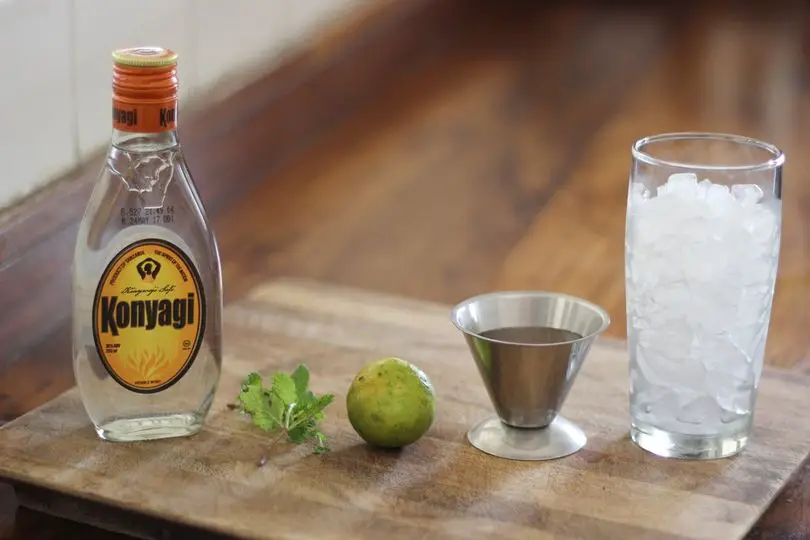
Konyagi, produced by Tanzania Distilleries Limited (a subsidiary of Tanzania Breweries Limited), is a white (clear) spirit made from molasses (sugarcane).
READ ALSO: How to Drink Konyagi Gin and Uganda Waragi
Table of Contents
READ ALSO: 3. What Is the Kongagi Spirit Price? & More
Konyagi Meaning in English
Konyagi is a brand of Tanzanian spirit. It is a popular alcoholic beverage in Tanzania and is known for its strong and distinctive flavor.
To the best of my knowledge, bottled Konyagi was named after, enkonyagi, a delicious(!) banana gin made by the Haya people of northwestern Tanzania. (In case you don’t know, I am Haya…woot woot!!)
Enkonyagi is derived from the word “Cognac“.
Unique Alcoholic Drinks in Rwanda, Uganda, or Tanzania: Konyage Tanzania
My father tells me that in the late sixties (or at least when he was at university and he graduated in 1970), Tanzania Distilleries held a competition to name a new spirit that they’d soon be launching.
The late Mr. Leonidas Joseph Mutashobya (R.I.P.), our neighbor from across the street in Kamachumu Village in Kagera, submitted the entry Konyagi—the Swahilinized version of enkonyagi—and won.
As they say, the rest is history.
READ ALSO: 15 Interesting Tanzania Pics
Interesting Tidbits About Konjagi Tanzania
Konyagi is not only a popular alcoholic beverage in Tanzania but also has some interesting aspects and history associated with it:
1. National Drink of Tanzania/National Deink of Tanzania
Konyagi is often referred to as the “national drink” of Tanzania. It has gained widespread popularity in the country and is enjoyed by both locals and tourists.
2. Konyagi Origin
Konyagi was originally developed in the 1970s by the Tanzanian government as a locally-produced alternative to imported spirits. Its creation was aimed at promoting domestic production and reducing the importation of foreign alcoholic beverages.
3. Konyagi Tanzanian Spirit Review
Konyagi has a unique and distinctive flavor that sets it apart from traditional rums. Its flavor profile is often described as somewhat citrusy with a slightly medicinal note.
This uniqueness makes it a sought-after drink among those looking to try something different.
Kynyege Fusion
Konyagi Fusion is a variant of the traditional Konyagi spirit.
It is a flavored version of Konyagi, infused with different flavors to appeal to a broader audience and offer a different tasting experience.
The “Fusion” line includes two versions—coconut and ginger & lemon—making it a versatile choice for cocktails and mixed drinks.
The aim is to provide a refreshing and modern twist on the classic Konyagi spirit, catering to changing consumer preferences and trends.
I have had Konyagi Fusion (the ginger and lemon flavour) before and I don’t like it at all. I wouldn’t bother trying Konyagi Fusion again.
Do any of you particularly like Konyagi Fusion?
If so, which flavour do you prefer?
Konyagi Zanzibar: Is Konyagi Available in Zanzibar?
Yes. Just as it’s available elsewhere in Tanzania, Konyagi is available in Zanzibar too.
Konyagi Is It a Whisker or?
Because Konyagi is made of molasses, it is technically a rum.
Konyagi Calling: Is Konyagi Available in US?
Yes, Konyagi is available in the US.
You can purchase it through Kisoly International Corporation (KIC).
Konyagi Ingredients
If you would like to know the exact ingredients in Tanzania Konyagi, click here.
John Drink Konyagi Two Konyagi and Bitter Lemmon
If by “John drink Konyagi two Konyagi and bitter lemon” you mean the drink commonly described as two Konyagi with bitter lemon, then yes, this is a recognizable Tanzanian bar order.
It is essentially a double Konyagi mixed with bitter lemon soda.
A travel account describing drinking in Tanzania specifically refers to ordering “double Konyagi … with a bitter lemon”, which gives us a good indication of how the order is understood in a Tanzanian bar.
What is in it?
The basic combination is:
- 2 measures of Konyagi
- Bitter lemon soda
- Ice, if served chilled
Konyagi is a Tanzanian spirit bottled at 35% ABV. Bitter lemon is a carbonated soft drink with a characteristic sweet-bitter citrus taste. Konyagi and bitter lemon have been paired in Tanzania for many years, and the combination appears on Tanzanian drinks menus and in descriptions of local drinking habits.
The proportions can vary considerably from one bar to another. “Two Konyagi” generally refers to two shots/measures of the spirit, rather than two bottles of Konyagi.
What Does It Taste Like?
Bitter lemon changes the character of Konyagi quite a bit.
On its own, Konyagi has a fairly assertive spirit flavour. Bitter lemon adds sweetness, carbonation and a noticeable bitter-citrus element, making the drink longer and easier to sip.
That combination is not particularly unusual in Tanzania. Bitter lemon is one of the mixers that has traditionally been used with Konyagi, alongside drinks such as cola and ginger soda.
There is even a long-standing association between Konyagi and bitter lemon in descriptions of Tanzanian bar culture. One Tanzanian forum discussion, for example, specifically mentions Konyagi mixed with bitter lemon as an alternative to mixing the spirit with energy drinks.
How strong is two Konyagi with bitter lemon?
This is the part that can be easy to underestimate because the bitter lemon makes the drink taste much lighter than the spirit itself.
If one measure is 25 ml, two measures would be 50 ml of Konyagi.
At 35% ABV, that contains about 17.5 ml of pure alcohol before accounting for the mixer.
If a bar uses 30 ml measures, two measures would be 60 ml of Konyagi, containing about 21 ml of pure alcohol.
And if the bar uses 50 ml measures, “two Konyagi” would mean 100 ml of spirit, containing about 35 ml of pure alcohol.
So the exact strength of a “two Konyagi and bitter lemon” depends substantially on what that particular bar considers a measure.
Is There a Name for the Drink?
I would not call it a specific cocktail with a standardized recipe.
In Tanzania, it is more naturally understood as an order: Konyagi x2 with bitter lemon.
That’s different from something like a Dawa, which has a recognizable recipe.
For example, a Tanzanian restaurant menu lists its Dawa as Konyagi x2, honey and lime.
So if you heard someone say “John drinks two Konyagi and bitter lemon,” the simplest interpretation is that John orders a double serving of Konyagi topped or mixed with bitter lemon soda, rather than that “John” is the name of a particular cocktail.
The Inspiration Behind This Post
Not too long ago, I met up for the first time with a reader of this blog who recently relocated to Dar es Salaam from Kampala.

Although we had never met before, we found that we had a lot in common including that our parents had completed their graduate studies at the same university in the U.S. (at the same time and even knew each other) and that we shared a common friend.
Our first encounter was an interesting one where we shared our life stories and spoke about things we could both relate to, such as the differences and similarities between life in Uganda and Tanzania.
This we discussed at length.
Our discussion went as far as to include the spirits produced in each country.
My new acquaintance and I were both familiar with Uganda Waragi, the Ugandan spirit. She had never tasted Konyagi, Uganda Waragi’s Tanzanian counterpart.
She asked me how I thought the two compared.
That question was the inspiration for this post.
READ ALSO: Fairway Hotel Kampala Menu & More About the Hotel
Photo Credits: Zambia Daily Mail